Back to Andes virus resource
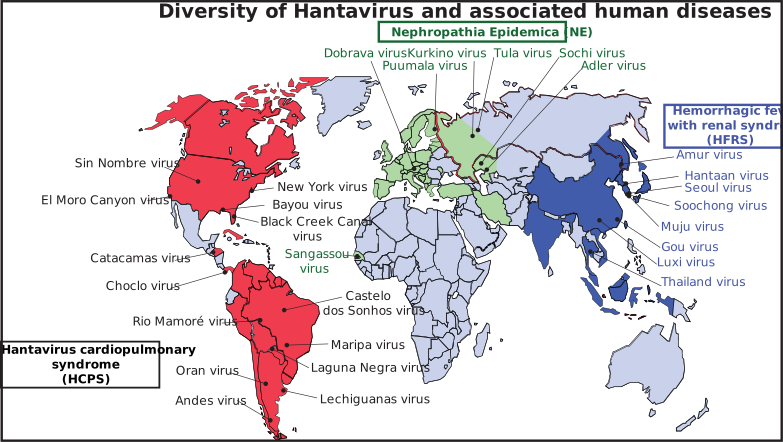
With the notable exception of Andes virus, hantaviruses are generally not transmitted from person to person. Based on their geographic distribution, evolutionary relationships, and the diseases they cause in humans, hantaviruses can be broadly divided into three major groups:
New World hantaviruses (the Americas)
These viruses cause Hantavirus pulmonary syndrome (HPS), a severe respiratory disease. Important examples include Sin Nombre virus and Andes virus. Annual incidence are about 100 cases per year (Andes virus) about 25 cases per year (Sin Nombre virus)
Old World hantaviruses (Asia)
These viruses are responsible for Hantavirus hemorrhagic fever with renal syndrome (HFRS), which is characterized by fever, hemorrhage, and acute kidney injury. Major examples include Hantaan virus and Seoul virus. Annual incidence: more than 10,000 cases worldwide
Old World hantaviruses (Europe)
European hantaviruses typically cause a milder form of HFRS known as Nephropathia epidemica (NE). The main causative agents are Puumala virus and Dobrava-Belgrade virus. Annual incidence: more than 1,000 cases
Together, these viruses represent an important and diverse group of zoonotic pathogens that can cause severe disease following accidental transmission from their natural animal hosts to humans.